
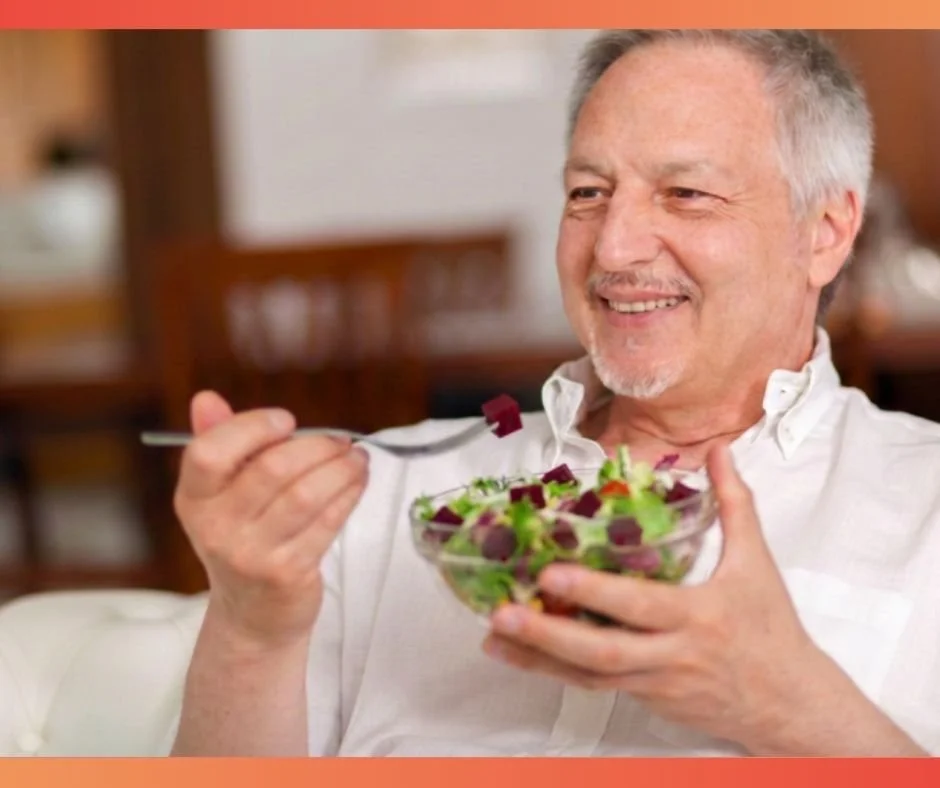
Does beetroot powder actually work? For some things, yes — modestly. Beetroot is naturally rich in dietary nitrate, which your body converts into nitric oxide, a molecule that helps blood vessels relax and influences blood flow, blood pressure, and how muscles use oxygen during exercise. The evidence supports small, real improvements in certain aspects of exercise performance and blood pressure — particularly in recreationally active people — not a dramatic transformation, and not a substitute for the exercise, nutrition, and blood pressure treatment that already work.
What's in this post?
- It Starts With Nitric Oxide
- Beets Aren't the Only Game in Town
- Can Beetroot Actually Improve Exercise Performance?
- What About VO₂ Max?
- The Blood Pressure Story May Be Just as Interesting
- Beyond Exercise: Why Nitric Oxide Matters for Healthspan
- Powder, Juice, Chews, Capsules and Shots: What Actually Matters?
- If You Want to Try It, Here's How
- What About Risk?
- So, Should You Take It?
Beetroot powder has become one of those supplements that seems to be everywhere. It shows up in pre-workout powders, cardiovascular supplements, gummies, drink mixes, and increasingly elaborate products promising better blood flow, better workouts, and better health.
Some of that marketing gets ahead of the science, but underneath the hype is something surprisingly legitimate. Researchers have been studying dietary nitrate and beetroot supplementation for years, and the accumulated evidence suggests it can modestly improve certain aspects of exercise performance while potentially providing benefits that extend beyond exercise. That doesn't make beetroot a miracle supplement. It does make it considerably more interesting than most things in the supplement aisle.
It Starts With Nitric Oxide
Blood vessels aren't simply pipes carrying blood around the body. They are living tissue that constantly changes diameter in response to what your body needs, and nitric oxide is one of the important signals controlling that process. When nitric oxide availability increases, the smooth muscle surrounding blood vessels can relax, allowing vessels to dilate and blood to flow more easily. During exercise, nitric oxide also influences blood flow to working muscle and muscle contraction.
Our bodies produce nitric oxide through more than one pathway, but one begins with something remarkably ordinary: vegetables. Beets, arugula, spinach, lettuce, and several other vegetables contain relatively high concentrations of nitrate. After we eat them, nitrate is absorbed from the gut into the bloodstream. But here's where the biology gets interesting: our salivary glands actively pull some of that circulating nitrate out of the blood and concentrate it back into our saliva, returning nitrate we've already swallowed to the mouth again and again for hours. Bacteria living primarily on the tongue then convert nitrate into nitrite. We swallow that nitrite, and additional reactions in the stomach and throughout the body can ultimately convert some of it into nitric oxide — the molecule we're after. This recycling process has a name: the enterosalivary circulation.
Your oral microbiome, in other words, participates in regulating your vascular physiology.
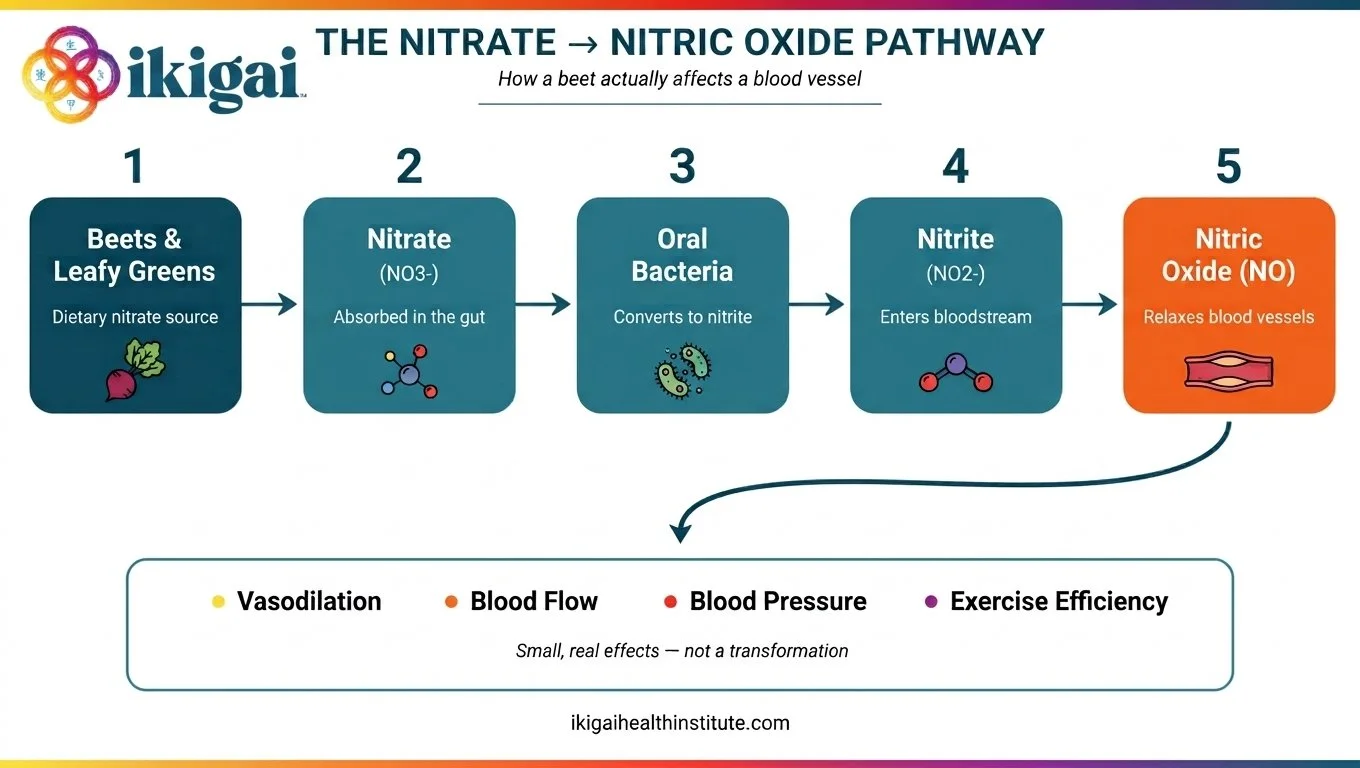
This also explains two practical points that are easy to misunderstand. You don't have to chew beetroot powder extensively or hold a beet drink in your mouth to "activate" it; there's no good evidence that deliberately chewing longer or swishing improves the effect. On the other hand, strong antibacterial mouthwash can reduce the ability of oral bacteria to convert nitrate into nitrite. The effect isn't large or entirely consistent, so you don't need to start scheduling mouthwash around your beetroot supplement, but routinely suppressing those bacteria may interfere with a biological pathway you're deliberately trying to enhance.
Beets Aren't the Only Game in Town
Beets have become synonymous with dietary nitrate largely because they provide a convenient way to study and package it. They aren't the only source. Leafy green vegetables — including arugula, spinach, and lettuce — can contain substantial amounts of nitrate, as can celery, radishes, and other vegetables. When nitrate comes packaged inside vegetables, you aren't just getting nitrate. You're getting fiber, potassium, polyphenols, and a collection of other nutrients and phytochemicals.
That makes the whole-food recommendation easy: eat more vegetables, particularly leafy greens. But that doesn't make supplementation pointless. Someone trying to consume a reasonably standardized dose of nitrate before a hard training session may not want to eat a giant arugula salad two hours beforehand, and the nitrate content of vegetables varies considerably according to growing conditions, processing, and storage. A supplement can provide convenience, concentration, and — if it's well made — a more predictable nitrate dose. Whole foods remain the nutritional foundation; supplementation serves a somewhat different purpose.
Can Beetroot Actually Improve Exercise Performance?
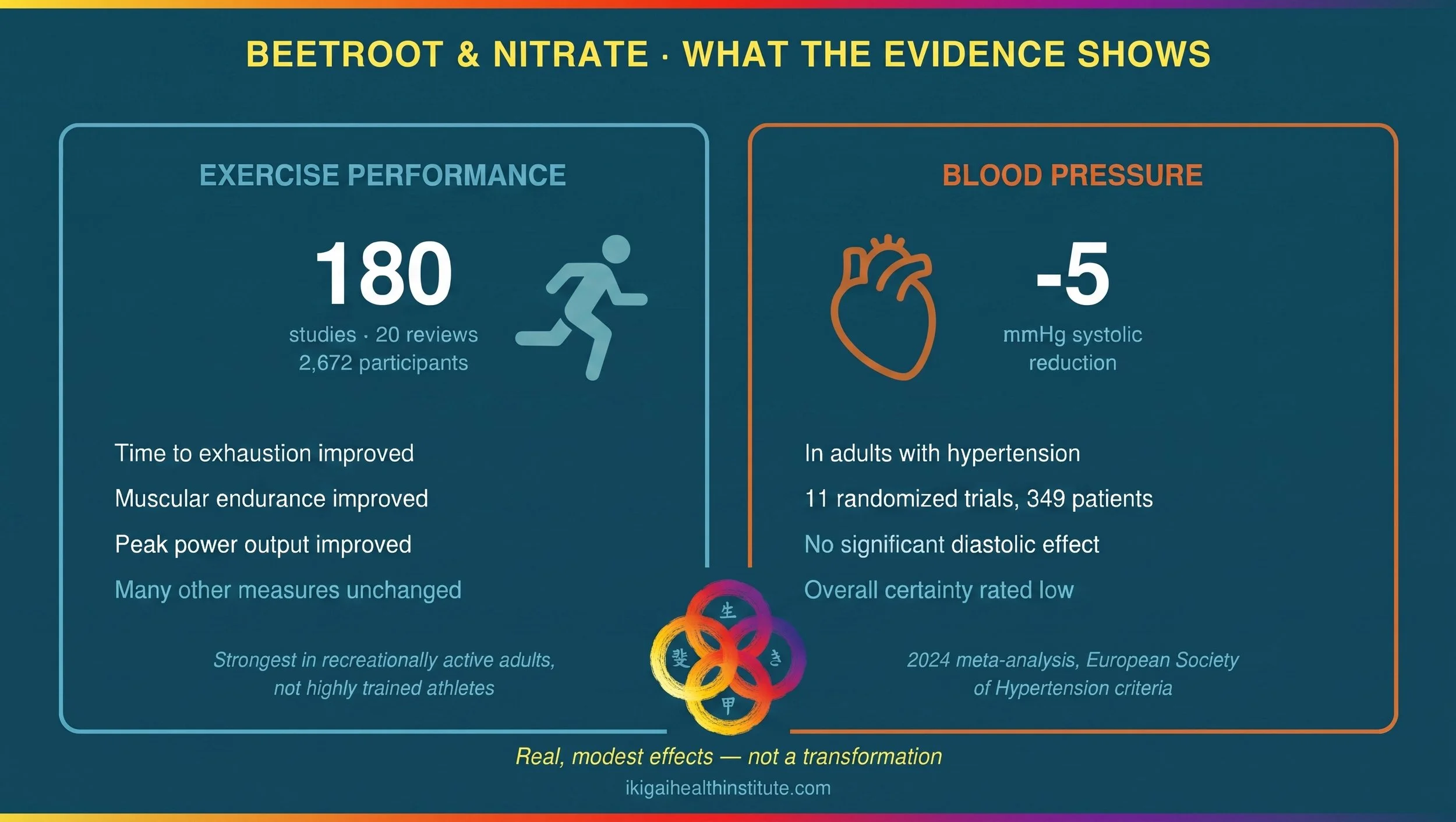
Probably, although you shouldn't expect it to suddenly make you a different athlete. A 2025 umbrella review — an analysis that evaluates multiple systematic reviews and meta-analyses rather than a single experiment — examined 20 reviews encompassing 180 studies and more than 2,600 participants. Dietary nitrate supplementation improved several outcomes, including time to exhaustion, muscular endurance, and peak power, while many other performance measures did not meaningfully change. The authors also rated most of the underlying reviews as low or critically low quality, an important reminder that a large volume of research doesn't automatically equal high-quality evidence.
The performance benefit appears particularly relevant during efforts lasting roughly two to ten minutes, and recreationally active people may derive more benefit than highly trained endurance athletes. An elite athlete already has an extraordinarily developed cardiovascular and muscular system, so there may simply be less room for nitrate to improve an already optimized process. The data in women are also less consistent, with several analyses failing to demonstrate the same clear performance benefit seen in broader or predominantly male study populations.
There's also evidence that nitrate can reduce the oxygen cost of a given amount of submaximal work, meaning the same pace or power output may require slightly less physiological effort. That doesn't necessarily translate into a dramatic improvement on your watch or bike computer, but it could make a hard effort a little more sustainable. The appropriate expectation is a potential marginal gain, not a transformation.
What About VO₂ Max?
This question is particularly interesting because VO₂ max is one of the physiologic measures we care deeply about at Ikigai. More recent analyses suggest beetroot supplementation may produce a small improvement in VO₂max or VO₂peak in some populations, again with a stronger signal among recreationally active adults than highly trained athletes. The evidence remains mixed, and we should be careful about confusing a supplement that changes exercise efficiency with one that fundamentally changes aerobic fitness.
Beetroot does not replace Zone 2 training, high-intensity intervals, consistency, or progressive overload. Those interventions create adaptations in the heart, blood vessels, mitochondria, and skeletal muscle. A nitrate supplement may influence how efficiently that system performs, but it does not build the system for you. Longer-term studies combining nitrate supplementation with exercise training have not consistently demonstrated greater improvements in VO₂peak than training alone. Training creates the foundation; beetroot may provide a small additional lever.
The Blood Pressure Story May Be Just as Interesting
Exercise performance gets most of the attention, but the cardiovascular literature may be at least as relevant for healthspan. In a 2024 meta-analysis of randomized trials involving people with hypertension, nitrate-rich beetroot juice reduced clinic systolic blood pressure by approximately 5 mmHg compared with control. The evidence wasn't perfect — there were only 349 participants, results varied among studies, and the overall certainty was considered low. Results from 24-hour ambulatory blood pressure studies are also mixed.
Still, a roughly five-point reduction in systolic blood pressure in someone who responds is not physiologically trivial, and the effect appears more consistent in people with hypertension or higher baseline blood pressure. None of this means someone with hypertension should start drinking beetroot juice instead of properly treating blood pressure. Exercise, healthy body composition, appropriate nutrition, good sleep, and antihypertensive medication when needed have much stronger evidence. Beetroot belongs alongside those interventions if it proves useful, not in place of them.
Healthspan medicine is rarely about finding one magic intervention. It's often about stacking small advantages. A few points of blood pressure improvement from a low-risk intervention may not sound dramatic, but neither is it meaningless.
Beyond Exercise: Why Nitric Oxide Matters for Healthspan
Exercise gives us a convenient way to study nitrate because performance can be measured over minutes or hours, but nitric oxide biology reaches well beyond a faster bike split or another repetition in the gym. The endothelium — the thin layer of cells lining our blood vessels — helps regulate vascular tone, blood flow, inflammation, and other processes important to cardiovascular health. Human trials and meta-analyses suggest dietary nitrate can produce small improvements in measures of endothelial function and arterial stiffness. Those findings don't prove that beetroot prevents heart attacks or strokes, but they make the vascular story more interesting than blood pressure alone.
Researchers are also exploring nitrate and nitric oxide in cerebral blood flow, cognition, muscle recovery, and glucose metabolism. These questions matter in healthspan because vascular health, brain health, metabolic health, and exercise capacity overlap extensively, but this is where we need to resist getting ahead of the evidence. Research on cognition and cerebral blood flow remains mixed, metabolic studies are inconsistent, and we do not have convincing randomized evidence that taking beetroot supplements prevents cardiovascular events, prevents cognitive decline, or extends lifespan.
A plausible mechanism is not the same thing as a demonstrated clinical outcome. The physiology is interesting enough without pretending we know more than we do.
Powder, Juice, Chews, Capsules and Shots: What Actually Matters?
If you're standing in front of a supplement shelf, don't get distracted by how many beets the manufacturer says went into the container. The first thing we want to know is how much nitrate the product reliably delivers. Simply putting "beetroot powder" on a label tells you surprisingly little because nitrate concentrations vary, and processing can further change what ends up in the finished product. Claims such as "40 times more concentrated" or "equivalent to X beets" are less useful than knowing the actual nitrate dose.
Formulation isn't completely irrelevant. Concentrated beetroot juice and small beetroot "shots" have some of the most consistent clinical evidence, particularly for blood pressure, and whole-food or juice preparations may contain polyphenols, betalains, and other compounds that isolated nitrate salts do not. Adequately dosed beetroot powders and extracts, however, have also demonstrated physiologic effects, and we don't have good head-to-head evidence showing that one formulation is universally superior when nitrate dose is matched.
The practical takeaway is simple: look for a reputable product that tells you how much nitrate it provides. A concentrated juice, shot, or powder with a standardized nitrate dose is much easier to evaluate than a scoop containing an unspecified amount of "beetroot." If you choose a beetroot juice or drink, read the rest of the label too. Some products add meaningful amounts of simple sugar; others do not. Be a wise consumer: know how much nitrate you're getting, know what else is in the product, and don't drink your sugar.
If You Want to Try It, Here's How
For a healthy adult interested in experimenting with dietary nitrate, a reasonable evidence-based starting point is approximately 6–8 mmol of nitrate, or roughly 370–500 mg. Studies have used both lower and substantially higher doses, but this range sits comfortably within the amount associated with benefit in much of the exercise literature. Taking it roughly two to four hours before a hard workout allows time for nitrate to move through the enterosalivary pathway, with plasma nitrite commonly peaking around two to three hours after ingestion.
There's also evidence for taking nitrate daily for several days before an important event, commonly around 5–10 mmol per day. More isn't necessarily better, and we have much less information about the value or long-term safety of taking concentrated high-dose nitrate supplements indefinitely.
Treat supplementation like an experiment rather than an act of faith. Keep the rest of your routine reasonably consistent and pay attention to something you can actually measure: pace, cycling power, repeat intervals, perceived exertion, or blood pressure. If you can't detect a meaningful difference after several well-controlled attempts, there may not be much reason to keep taking it.
What About Risk?
For most healthy adults, short-term dietary nitrate and beetroot supplementation appear to be well tolerated. Some people develop gastrointestinal symptoms, and beet pigments can turn urine or stool pink or red — a harmless phenomenon that can be startling if you aren't expecting it.
Because nitrate can lower blood pressure, people who already have low blood pressure or take antihypertensive medications should be more thoughtful about adding a concentrated nitrate supplement. People taking prescription nitrate medications or PDE-5 inhibitors such as sildenafil or tadalafil should discuss concentrated nitrate supplementation with their clinician. Dietary nitrate from vegetables or beetroot is not equivalent to prescription nitroglycerin, and evidence has not established the same dangerous interaction, but the overlapping vascular effects make a clinician conversation prudent.
People with a history of calcium-oxalate kidney stones should also be thoughtful about frequent concentrated beet products, which can be high in oxalate. We don't have adequate safety data for concentrated beetroot supplementation during pregnancy, and the long-term safety of consuming large supplemental nitrate doses every day for years is less established than the short-term literature. "Low risk" is not the same thing as "zero risk," and evidence supporting a useful dose doesn't justify taking progressively larger amounts forever.
So, Should You Take It?
Whole-food sources should come first. A diet rich in leafy greens, beets, and other nitrate-containing vegetables brings benefits far beyond nitric oxide, and real food should remain the foundation of almost every nutrition strategy we discuss.
But that doesn't mean beetroot supplementation has no place. For many healthy adults, the risk-to-potential-reward equation appears favorable. The potential upside is modest but plausible: slightly better exercise performance or efficiency in some people, favorable effects on vascular function, and potentially a modest reduction in blood pressure. When a reputable product is used at studied doses, the apparent downside is relatively small.
For someone who eats well, exercises consistently, and wants to experiment with another small healthspan or performance lever, a nitrate-standardized beetroot product is reasonable to consider. Ikigai does not sell supplements, and we do not profit from the products our patients choose to use. Our interest is simply whether an intervention has enough evidence, enough potential benefit, and little enough risk to be worth considering. Beetroot supplementation clears that bar for many people, although the likely benefit remains modest.
The Ikigai Approach
We start with the interventions carrying enormous potential returns: exercise, nutrition, sleep, healthy body composition, blood pressure, metabolic health, avoiding tobacco, and maintaining meaningful relationships. No powder competes with those interventions, and a supplement should never become a distraction from them. We apply this same evidence-first framework to every supplement and medication we evaluate for cardiovascular risk reduction.
Then we ask whether smaller interventions can add something useful without adding meaningful risk. Beetroot fits that framework unusually well. The mechanism is established, human evidence exists, the effect appears relatively small but potentially useful, and the short-term safety profile is generally favorable. Unlike many supplements promising vaguely defined "energy," "circulation," or "longevity," we can identify the molecule we're trying to manipulate, understand the biological pathway, and measure at least some of its effects.
So start with food. If you want to deliberately target the nitrate-nitrite-nitric oxide pathway, a reputable beetroot supplement with a known nitrate dose is a reasonable option. Roughly 370–500 mg of nitrate taken two to four hours before a hard training session is a sensible place to start, and you should expect a possible small advantage rather than a dramatic transformation.
Nitric oxide matters. Beetroot can influence it. The benefits appear real enough to be interesting, the risks low enough for many people to reasonably experiment, and the effect small enough to keep in perspective. That's probably exactly where a supplement belongs.
Take the Next Step
Wondering whether a supplement is actually worth taking — or which ones might genuinely move the needle for your cardiovascular health? That's exactly the kind of question we help patients answer.
Schedule a Consultation — Get a personalized, evidence-based review of your supplement and medication strategy.
Join the Ikigai Newsletter — Get our Insights series delivered to your inbox.
Explore Our Programs — See how Ikigai integrates nutrition, exercise, and cardiovascular risk reduction into a complete strategy.
Recommended Reading
Medications and Supplements for Cardiovascular Risk Reduction — Our broader framework for evaluating what's actually worth taking.
VO₂ Max: Your Ultimate Longevity Predictor — Why this measure matters more than almost any supplement.
Movement as Medicine for the Heart — The training foundation no supplement can replace.
High Blood Pressure and Arterial Stiffness — The bigger picture behind the blood pressure numbers in this post.
The Glycocalyx: What Is It? — More on the vascular lining nitric oxide helps protect.
Food as Medicine for the Heart — Why whole foods remain the foundation before any supplement.
References
The information in this post is for educational purposes only and is not intended as medical advice. Always consult with a physician before beginning any new supplement, especially if you take blood pressure medication, nitrate medications, or PD



Stop guessing. Start optimizing.
You have a strategy for your wealth and your career. It's time to build one for your health.