
Vascular Health and Brain Health: Why Healthy Blood Vessels Matter for Your Brain
Why does vascular health matter for the brain? The same risk factors that drive heart attack and stroke — high blood pressure, atherosclerosis, insulin resistance, and chronic inflammation — also accelerate cognitive decline and increase dementia risk. Although vascular dementia is directly caused by impaired cerebral blood flow, vascular dysfunction is now recognized as a major contributor to Alzheimer's disease as well. Protecting your brain starts with protecting your blood vessels — and the window to act meaningfully is decades before symptoms appear.
What's in this post?
Why dementia isn't a single disease: Alzheimer's, vascular dementia, and the overlap between them.
What vascular health actually means: How healthy arteries support brain function.
Why blood pressure matters so much: The most important modifiable vascular risk factor for the brain.
The heart-brain connection: Why cardiovascular and brain health share the same risk factors.
What is vascular dementia? How impaired blood flow causes cognitive decline.
How we assess vascular risk at Ikigai: The tools we use to identify risk before symptoms appear.
What you can do: Evidence-based strategies to protect vascular and brain health.
Dementia Is Not a Single Disease
Most people think of Alzheimer's disease as a disease of memory. But dementia is not a single condition.
The term dementia describes a group of conditions that impair memory, thinking, and daily function. Alzheimer's disease is the most common form, accounting for roughly 60–80% of cases, while vascular dementia, Lewy body dementia, and frontotemporal dementia represent other important causes.
Because vascular dementia is directly caused by impaired blood flow and damage to blood vessels in the brain, many people assume vascular health is only relevant to that specific diagnosis. The reality is more nuanced.
Research increasingly shows that vascular health influences Alzheimer's disease risk as well. High blood pressure, atherosclerosis, diabetes, insulin resistance, smoking, and other vascular risk factors are all associated with a higher risk of cognitive decline and Alzheimer's dementia. Vascular health is now recognized as one of the most important modifiable contributors to long-term brain health — and the same factors that increase the risk of heart attack and stroke can also accelerate cognitive decline and contribute to dementia.
Protecting your brain starts with protecting your blood vessels.
What Is Vascular Health?
Vascular health refers to the condition and function of your blood vessels. We've explored two foundational aspects of this in earlier posts in our cardiovascular series — arterial stiffness and vascular aging and the glycocalyx, the protective inner lining of every blood vessel in your body.
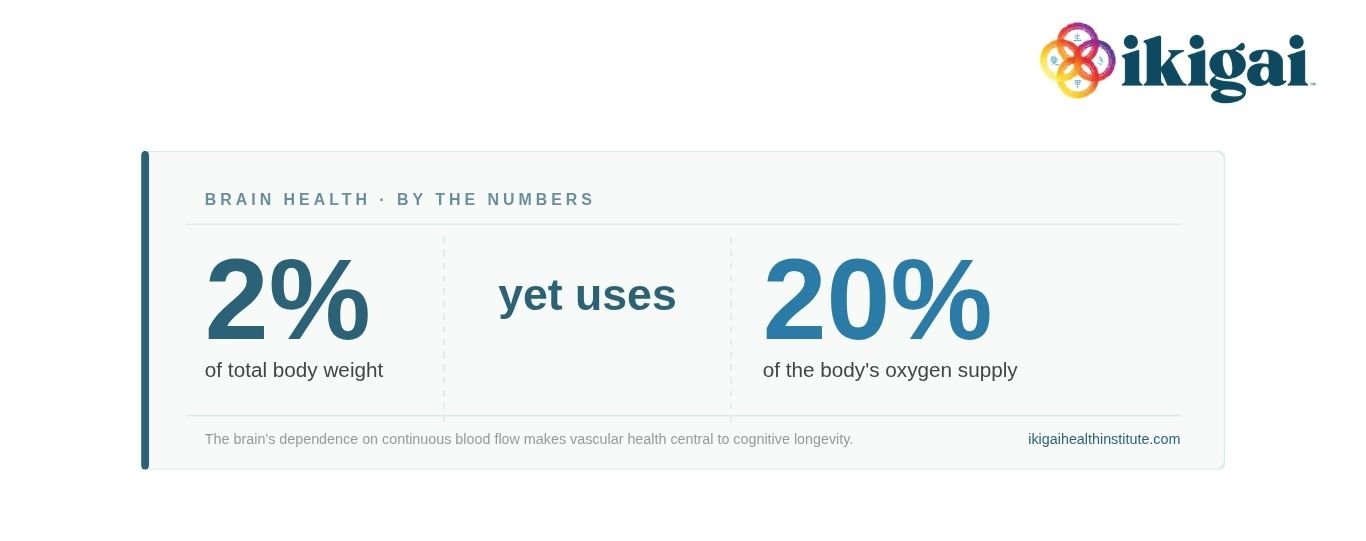
Healthy arteries are flexible, resilient, and capable of delivering adequate blood flow throughout the body — to the heart, muscles, kidneys, and perhaps most importantly, the brain. Although the brain accounts for only about 2% of total body weight, it consumes approximately 20% of the body's oxygen supply. It relies on a continuous flow of blood to support billions of neurons and trillions of connections that enable thinking, memory, attention, and decision-making.
Even small disruptions in blood flow can affect brain performance. Over time, chronic vascular injury can contribute to structural changes within the brain that may increase the risk of cognitive decline and dementia.
Why Blood Pressure Matters So Much for Brain Health
Among all vascular risk factors, high blood pressure may carry the greatest dementia risk — and the most actionable opportunity for intervention.
Elevated blood pressure places constant stress on blood vessel walls. Over time, this can damage both large arteries and the tiny vessels that penetrate deep into brain tissue. This damage can lead to reduced blood flow, cerebral small vessel disease — damage to the tiny vessels deep in brain tissue — microscopic strokes, white matter injury, and brain atrophy — many of which occur years before symptoms become noticeable.
Large studies have consistently shown that individuals with uncontrolled hypertension in midlife have a significantly higher risk of cognitive decline and dementia later in life. Clinical trials have also demonstrated that more intensive blood pressure control can reduce the risk of cognitive decline and mild cognitive impairment.
The challenge is that high blood pressure often produces no symptoms until damage has already occurred. This is one reason we consider blood pressure monitoring — including home monitoring over time — a foundational component of both cardiovascular and brain health assessment at Ikigai. A single clinic reading is a snapshot. Patterns over time tell a much richer story.

The Heart-Brain Connection
The factors that increase cardiovascular risk are often the same factors that increase dementia risk. This overlap is not a coincidence — healthy blood vessels support both heart function and brain function, and damage to those vessels affects both organs.
Key shared risk factors include:
High blood pressure
Elevated ApoB and atherosclerosis — linked to both cardiovascular and dementia risk
Smoking
Obesity and poor body composition
Physical inactivity
Chronic inflammation
For this reason, many experts now view cardiovascular disease prevention and brain health optimization as closely connected goals rather than separate medical concerns. We explored this relationship in depth throughout our cardiovascular health series and our ongoing Brain Health Series.
What Is Vascular Dementia?
Vascular dementia is the second most common form of dementia and may account for a substantial proportion of cognitive impairment in older adults.
It occurs when reduced blood flow damages areas of the brain involved in memory, thinking, and behavior. Symptoms may include confusion, difficulty with concentration and planning, slowed thinking, and sudden or stepwise changes in cognition — though presentation varies depending on where and how vascular injury occurs. This damage may result from large strokes, multiple small strokes, chronic small vessel disease (the most common cause of vascular dementia), or long-standing vascular injury.
Importantly, Alzheimer's disease and vascular disease often coexist. Studies of individuals with dementia have found that the combination of Alzheimer's pathology and cerebrovascular disease is more common than pure vascular dementia alone. Evidence of vascular injury is present in a substantial proportion of dementia cases — reinforcing the idea that vascular health matters regardless of the specific diagnosis.
As we outlined in our post on modifiable dementia risk factors, the Lancet Commission estimates that nearly half of all dementia cases are attributable to modifiable risk factors — and vascular risk factors make up a significant portion of that list.
How We Assess Vascular Risk at Ikigai
One of the challenges of vascular disease is that it often develops silently. Many people feel healthy while plaque accumulates within arteries or blood vessels gradually lose function. Because of this, we focus on identifying risk before symptoms appear.
Depending on an individual's age, history, goals, and risk profile, our evaluation may include:
Blood pressure monitoring — including home readings over time
Advanced lipid testing including ApoB
Metabolic health assessment and continuous glucose monitoring
Body composition analysis
Coronary CT angiography when appropriate
Exercise testing including VO₂ max
Lifestyle and nutrition evaluation
Our goal is to identify risk early enough to meaningfully alter the trajectory of disease — not to wait for symptoms that signal damage already done.
The Good News: Vascular Health Is Modifiable
Unlike age and genetics, many vascular risk factors can be improved. The most effective evidence-based strategies include:
Control blood pressure. Blood pressure management remains one of the strongest interventions for reducing vascular risk and protecting brain function. Don't rely on annual clinic readings alone — home monitoring over time reveals patterns a single snapshot cannot.
Improve metabolic health. Reducing insulin resistance and maintaining healthy blood sugar levels helps preserve both vascular function and cognitive health. The oral glucose tolerance test remains one of the most underused tools for detecting early metabolic dysfunction.
Exercise regularly. Aerobic exercise improves blood vessel function, enhances blood flow to the brain, and reduces many of the risk factors associated with dementia. As we discussed in our post on exercise and brain health, physical activity remains one of the most powerful tools available for supporting long-term cognitive function.
Optimize nutrition. Dietary patterns such as the Mediterranean and MIND diets emphasize vegetables, fruits, legumes, healthy fats, and minimally processed foods that support vascular health throughout the body.
Avoid tobacco. Smoking accelerates vascular damage and increases the risk of stroke, cognitive decline, and dementia.
Prioritize sleep. Poor sleep contributes to hypertension, metabolic dysfunction, inflammation, and vascular disease — all of which compound over time.
Looking Beyond Memory
When people think about brain health, they often focus on puzzles, memory games, or supplements. While those interventions may have a role, the foundation of long-term brain health is often much more basic.
Healthy brains require healthy blood vessels.
One of the most important lessons from dementia research is that timing matters. The vascular risk factors that contribute to cognitive decline often begin damaging blood vessels decades before symptoms appear. Protecting your brain at age 70 frequently starts with decisions made at age 40, 50, and 60.
The same actions that reduce your risk of heart attack and stroke can also help preserve memory, cognitive performance, and independence as you age. If you want to protect your brain, start by protecting the vascular system that keeps it alive.
At Ikigai Health Institute, we believe brain health begins decades before symptoms appear. Understanding and improving vascular health is one of the most powerful opportunities we have to influence that trajectory.
Take the Next Step
Vascular health is one of the most actionable levers we have for long-term brain health. At Ikigai, we assess cardiovascular risk, metabolic health, blood pressure patterns, and cognitive risk as part of a comprehensive longevity care plan.
Schedule a Brain Health Consultation — Build a personalized strategy for long-term cognitive and vascular resilience.
Join the Ikigai Newsletter — Get the full Brain Health Series and cardiovascular series delivered to your inbox.
Explore Our Programs — See how Ikigai integrates vascular, metabolic, and brain health assessment into your care.
Recommended Reading
Arterial Stiffness and Vascular Aging — How arteries age, what pulse pressure reveals, and why it matters for the brain.
The Glycocalyx: What Is It and How Do You Protect It? — The protective inner lining of your blood vessels — and why it's central to vascular health.
What Drives Atherosclerosis? — ApoB, plaque formation, and the cardiovascular risk factors that overlap with dementia risk.
Insulin Resistance and Brain Aging — How metabolic dysfunction creates a brain energy gap long before symptoms appear.
Exercise and Brain Health — How movement protects cognitive function through vascular, metabolic, and neuroplasticity pathways.
Sleep and Brain Health — Why poor sleep compounds vascular risk and accelerates brain aging.
Dementia Risk Factors: What You Can Control — The 14 modifiable risk factors linked to nearly half of all dementia cases.
A Look Ahead
Next in the Brain Health Series, we'll explore social connection — one of the most underappreciated and most powerful protective factors for cognitive health. Why isolation accelerates brain aging, what the research actually shows, and how we think about it at Ikigai.
The information in this post is for educational purposes only and is not intended as medical advice. Always consult with a physician before beginning any new health protocol.
