
Nutrition and Brain Health: Beyond "Brain Foods"
Does diet affect brain health? Yes — but not in the way most headlines suggest. The brain is not protected by a handful of so-called superfoods. It is supported or harmed by the overall metabolic environment in which it operates. Blood sugar regulation, insulin sensitivity, body composition, inflammation, vascular health, sleep, and physical activity all influence brain health far more than any single food. The most important nutritional question for long-term cognitive health is not whether you eat blueberries. It is whether your diet is creating the metabolic conditions your brain needs to thrive for decades.
What's in this post?
Why nutrition research is so difficult: Why bold claims and miracle foods deserve skepticism.
What the evidence consistently shows: The dietary patterns linked to slower cognitive decline.
The brain-metabolism connection: Why metabolic health may matter more than any specific food.
Ultra-processed foods and cognitive decline: One of the strongest emerging signals in nutrition research.
The gut-brain connection: What we know and what remains uncertain.
What a brain-healthy diet actually looks like: Practical principles over rigid rules.
What you should actually do: The highest-yield questions to ask yourself.
The Problem With "Brain Foods"
Search online for ways to protect your brain, and you'll quickly find endless lists of superfoods. Blueberries. Salmon. Walnuts. Turmeric. Dark chocolate.
Most of these foods are genuinely healthy, and some have been linked to better cognitive function in research studies. But focusing on individual foods misses the bigger picture.
The brain is not protected by a handful of so-called superfoods. It is supported — or harmed — by the overall metabolic environment in which it operates. Blood sugar regulation, body composition, inflammation, blood pressure, vascular health, sleep quality, and physical activity all influence brain health — often far more than any single food ever could.
The question is not whether blueberries are good for your brain. The more important question is whether your overall diet is creating the conditions that allow your brain to thrive for decades.
Why Nutrition Research Is So Challenging
Nutrition science is notoriously difficult to study.
Unlike a medication trial, researchers cannot easily assign thousands of people to eat a specific diet for twenty years and ensure perfect compliance. Most nutrition studies rely on questionnaires that ask people to remember what they ate over months or years — and human memory is not always reliable.
People who eat healthier diets also tend to exercise more, smoke less, have higher levels of education, and engage in other behaviors associated with better health. Researchers work hard to account for these factors, but separating the effects of diet from the effects of an overall healthy lifestyle is genuinely difficult.
This doesn't mean nutrition research is worthless. It simply means we should be cautious about bold claims and miracle foods. When someone tells you a single food prevents Alzheimer's disease, skepticism is warranted.
What the Evidence Consistently Shows
Despite these challenges, some themes appear again and again.
People who consume diets rich in vegetables, fruits, fish, nuts, legumes, and minimally processed foods generally experience slower cognitive decline and lower rates of dementia than those consuming diets dominated by highly processed foods.
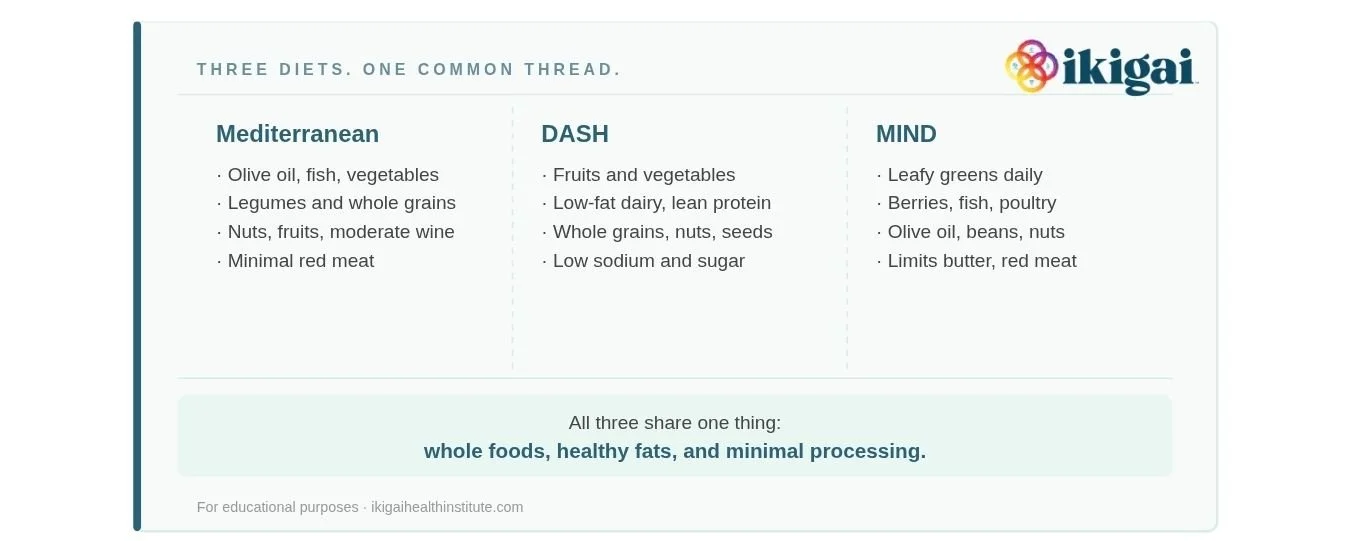
Researchers have studied several dietary patterns — including the Mediterranean diet, the DASH diet, and the MIND diet. While not every study reaches the same conclusion, the overall signal is remarkably consistent: dietary patterns associated with better cardiovascular and metabolic health are also associated with better brain health.
Importantly, when researchers tested the MIND diet in a rigorous clinical trial, it did not outperform a control diet with mild caloric restriction. One reason may be that participants in the control group also improved their eating habits during the study — a reminder that observational associations do not always hold up in randomized trials, and that nutrition science is rarely as simple as headlines suggest.
The brain depends on healthy blood vessels, healthy metabolism, and a steady supply of energy. The same habits that support heart health often support brain health as well. As we explored in our post on vascular health and brain health, that overlap is not a coincidence — it reflects shared underlying biology.
The Brain–Metabolism Connection
One of the most important developments in brain health research over the past two decades has been the growing recognition that metabolic health and brain health are deeply connected.
Individuals with obesity, insulin resistance, type 2 diabetes, and excess visceral fat face a significantly higher risk of cognitive decline and dementia. Several mechanisms are likely involved.
Persistently elevated blood sugar can damage the small blood vessels that supply the brain. Insulin resistance may impair the brain's ability to efficiently use energy. Excess visceral fat promotes chronic inflammation throughout the body. Metabolic dysfunction also increases the risk of hypertension, stroke, and sleep apnea — each of which independently affects brain health.
This is one reason we spend so much time assessing metabolic health at Ikigai. Continuous glucose monitoring, glucose tolerance testing, body composition analysis, and visceral fat measurement are not simply tools for diabetes prevention. They are also tools for protecting long-term brain health.
Brain Health Is a Long Game
Dementia does not develop overnight. In many cases, the biological changes begin decades before symptoms appear.
Research increasingly suggests that dietary and metabolic patterns established during midlife may have an outsized impact on brain health later in life. While that may sound discouraging, it is actually empowering. The choices you make in your 40s, 50s, and 60s may matter more than any intervention attempted after memory problems begin.
This perspective also helps explain why researchers have struggled to demonstrate large benefits from short-term dietary interventions. Brain health is not built in months. It is built over decades.
A Better Question: How Healthy Is Your Metabolism?
Many people can name a "brain food," but far fewer know whether they are insulin resistant. That is unfortunate — because insulin resistance is likely far more important to long-term brain health than whether you eat blueberries twice a week.
If you are looking for the highest-yield nutritional question to ask yourself, start here:
Do I know my metabolic health status?
Do I know my fasting insulin?
Have I ever worn a continuous glucose monitor?
Do I know my visceral fat level?
Can I maintain stable blood sugar throughout the day?
These questions may not be as exciting as the latest nutrition headline — but they are far more actionable.
Ultra-Processed Foods and Cognitive Decline
One of the strongest emerging signals in nutrition research is the relationship between ultra-processed food consumption and cognitive decline.
Ultra-processed foods are products heavily modified from their original form — often containing combinations of refined carbohydrates, industrial oils, additives, flavor enhancers, and preservatives. Examples include many packaged snacks, sugary beverages, fast foods, and highly processed convenience foods.
Large observational studies have found that individuals consuming the highest amounts of ultra-processed foods experience higher rates of cognitive decline and dementia. These studies cannot prove cause and effect. However, the findings are consistent with what we know about inflammation, metabolic dysfunction, obesity, and vascular disease.
Whether ultra-processed foods directly harm the brain or primarily do so through their effects on metabolic health remains unclear. Either way, the practical recommendation is the same: eat more whole and minimally processed foods, and fewer ultra-processed ones.

The Gut-Brain Connection
Researchers are increasingly interested in the connection between the gut and the brain. The trillions of microorganisms that live in the digestive tract interact with the immune system, influence inflammation, and produce compounds that may affect brain function.
While much remains unknown, diets rich in vegetables, fruits, legumes, and other fiber-containing foods appear to support a healthier and more diverse gut ecosystem. Once again, the same dietary patterns associated with better overall health may also support long-term brain health.
Nutrition Works Best as Part of a Bigger Strategy
One of the most encouraging findings in brain health research comes from studies that combine nutrition with other healthy behaviors. Large clinical trials such as the FINGER and US POINTER studies have shown that programs incorporating dietary improvements, regular exercise, cognitive engagement, and cardiovascular risk management can slow cognitive decline more effectively than health education alone.
The message is consistent with what we've emphasized throughout this series: nutrition matters, but it works best alongside sleep, vascular health, and metabolic optimization — not in isolation.
What Does a Brain-Healthy Diet Actually Look Like?
While researchers continue to debate the ideal diet, several themes appear consistently across studies of brain health, cardiovascular health, and longevity.
A brain-healthy dietary pattern typically includes:
Vegetables and fruits at most meals
Adequate protein from fish, eggs, poultry, legumes, and fermented dairy
Healthy fats from olive oil, nuts, seeds, avocados, and fish
Fiber-rich carbohydrates such as beans, lentils, vegetables, fruit, and minimally processed grains
Limited ultra-processed foods and sugary beverages
Just as important is what these foods help accomplish: more stable blood sugar, healthier body composition, lower levels of inflammation, and better long-term metabolic health.
If these principles sound familiar, they should. In our previous post, Nutrition for Longevity: Principles Over Fads, we discussed how longevity nutrition is rarely about rigid rules or the latest trend. The strongest evidence continues to support dietary patterns centered on whole, minimally processed foods, adequate protein, healthy fats, and metabolic health.
A brain-healthy diet is rarely about a single food. It is about creating a pattern that supports the health of the entire body.
What Should You Actually Do?
You don't need to memorize a list of brain foods, buy an expensive supplement stack, or chase every nutrition trend on social media. Focus on the fundamentals:
Prioritize vegetables and fruits
Eat adequate protein, particularly as you age and preserving muscle mass becomes increasingly important
Include healthy fat sources — fish, nuts, seeds, and olive oil
Reduce ultra-processed food intake
Maintain a healthy body composition
Monitor and improve metabolic health
Stay physically active
Protect your sleep
Limit alcohol — emerging evidence suggests even moderate consumption may affect long-term brain health
None of these recommendations are particularly glamorous. But they are supported by a growing body of evidence and align with the same strategies that reduce the risk of cardiovascular disease, type 2 diabetes, and other chronic illnesses.
The Real Question
The science of nutrition and brain health is imperfect.
We do not have definitive proof that any specific food prevents dementia. We do not know that blueberries are better than blackberries, or that one supplement can preserve memory for decades.
What we do know is that brains tend to age better when they are supported by healthy metabolism, healthy blood vessels, regular physical activity, quality sleep, and a nutrient-dense dietary pattern.
So perhaps the real question is not whether you are eating enough brain foods.
It is whether your daily habits are creating the conditions that allow your brain to thrive for decades to come.
Stop searching for a miracle brain food. Start understanding your metabolic health. Your brain will benefit far more from that knowledge than from any superfood headline.
Take the Next Step
Nutrition is one pillar of a comprehensive brain health strategy. At Ikigai, we assess metabolic health, glucose regulation, body composition, and cognitive risk as part of a personalized longevity care plan — because what you eat shapes the environment your brain operates in for decades.
Schedule a Brain Health Consultation — Build a personalized strategy for long-term cognitive and metabolic resilience.
Join the Ikigai Newsletter — Get the full Brain Health Series delivered to your inbox.
Explore Our Programs — See how Ikigai integrates nutrition, metabolic health, and brain health assessment into your care.
Recommended Reading
Brain Health Is Built, Not Found — The foundational framework for understanding how cognitive resilience is built over decades.
Insulin Resistance and Brain Aging — Why metabolic dysfunction creates a brain energy gap long before symptoms appear.
Vascular Health and Brain Health — Why protecting your blood vessels is one of the most powerful ways to protect your brain.
How To Tell If You Are Insulin Resistant — The test most doctors never order — and why it matters for brain health.
Exercise and Brain Health — Nutrition's most important partner for long-term cognitive function.
Sleep and Brain Health — Why poor sleep undermines the metabolic and vascular health nutrition is working to build.
Nutrition for Longevity: Principles Over Fads — The broader longevity nutrition framework this post builds on.
A Look Ahead
Next in the Brain Health Series, we'll explore stress and its impact on cognitive health.
